

Project Overview
Simternship combines simulation-based learning with internship-style tasks, helping students apply classroom concepts through guided scenarios, real-world decisions, and feedback-driven practice.
Problem:
Traditional education often teaches concepts in isolation, making it difficult for students to understand how to apply knowledge in real workplace situations.
Goal:
Create an interactive learning experience that guides students through realistic tasks, decisions, and feedback loops so they can build practical, job-ready skills.
My role:
Designed the student experience across user flows, task journeys, UI screens, and feedback interactions.
Scope:
Student learning journey
Scenario-based task flow
Interactive decision-making
Feedback and reflection experience
High-fidelity UI design
Discovery & Audit
Before designing the Simternship experience, I explored how Stukent’s simulation-based learning model could help students turn classroom concepts into practical, career-focused tasks.
Simternship places students in realistic workplace scenarios where they review information, make decisions, complete tasks, and receive feedback. The discovery phase focused on making this experience clear, guided, and meaningful without removing student autonomy.
Key Findings
Learning Needed To Feel Applied:
Students needed opportunities to apply concepts through realistic tasks that reflected workplace responsibilities.
Tasks Needed Clear Structure:
With multiple activities like scenarios, documents, chats, campaign tasks, and submission, students needed a clear flow to understand what to do next.
Feedback Needed To Support Reflection:
Feedback needed to explain the impact of student decisions, not just show whether an answer was right or wrong.
Learning Experience Audit
I reviewed the student journey across scenario introduction, task navigation, document review, workplace communication, decision-making, submission, and feedback moments.



Structuring the
Learning Journey
After defining the learning gap, I mapped how students would move through a Simternship round — from understanding the scenario to completing tasks, making decisions, submitting work, and receiving feedback.
The goal was to create a guided experience that helped students understand what to do next while still allowing them to practice independent decision-making.
Student Task Flow
Mapped the core student journey from scenario introduction to final submission and reflection.
I structured the experience around a repeatable learning flow: understand the business context, review supporting materials, respond to workplace-style messages, complete applied tasks, and review the outcome.

Guided Task Experience
Designed task-based screens that helped students stay oriented throughout each round.
Each task was connected to a learning objective, business scenario, and supporting context so students could understand not only what they were doing, but why it mattered.

Feedback Loop
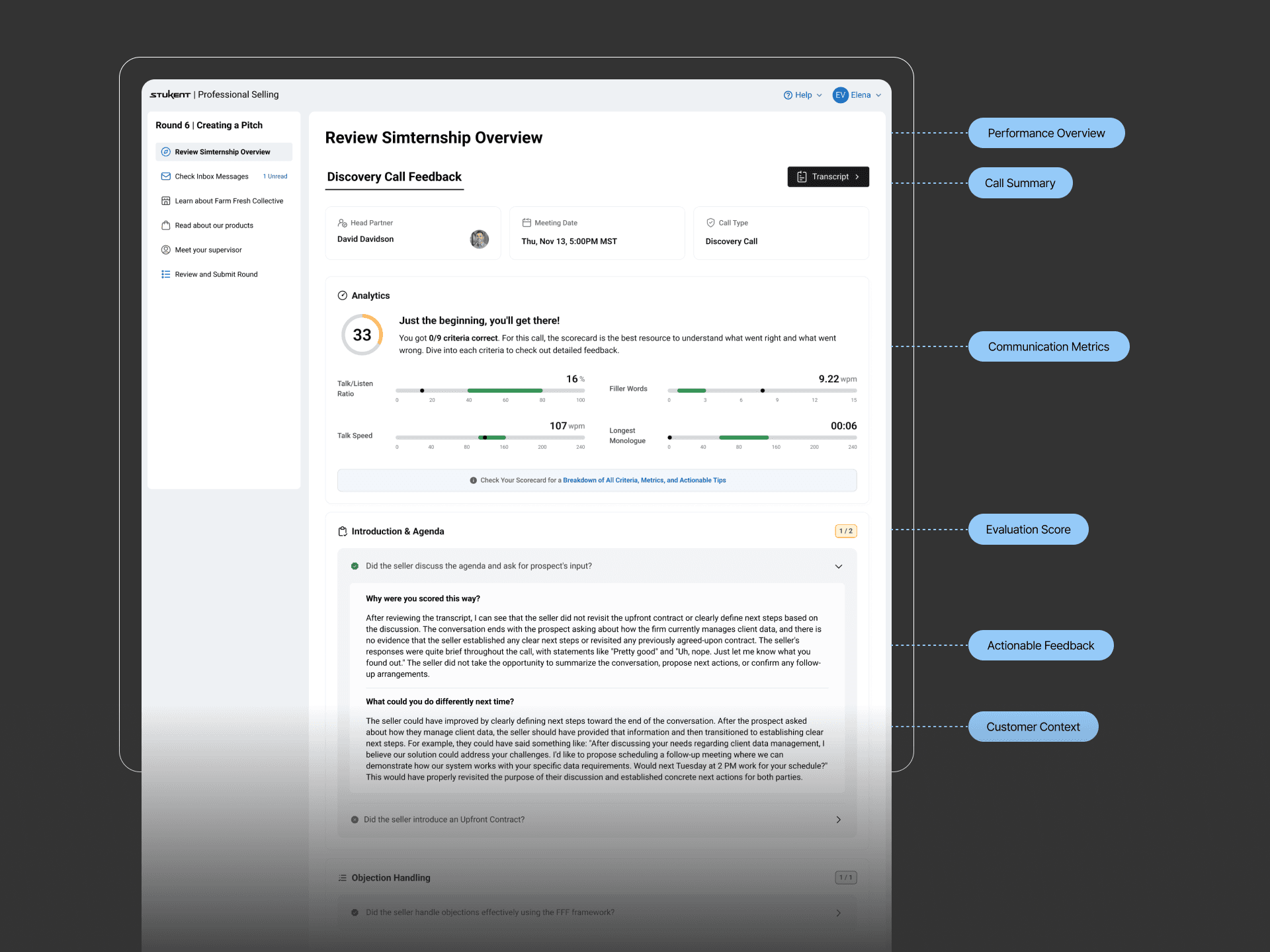
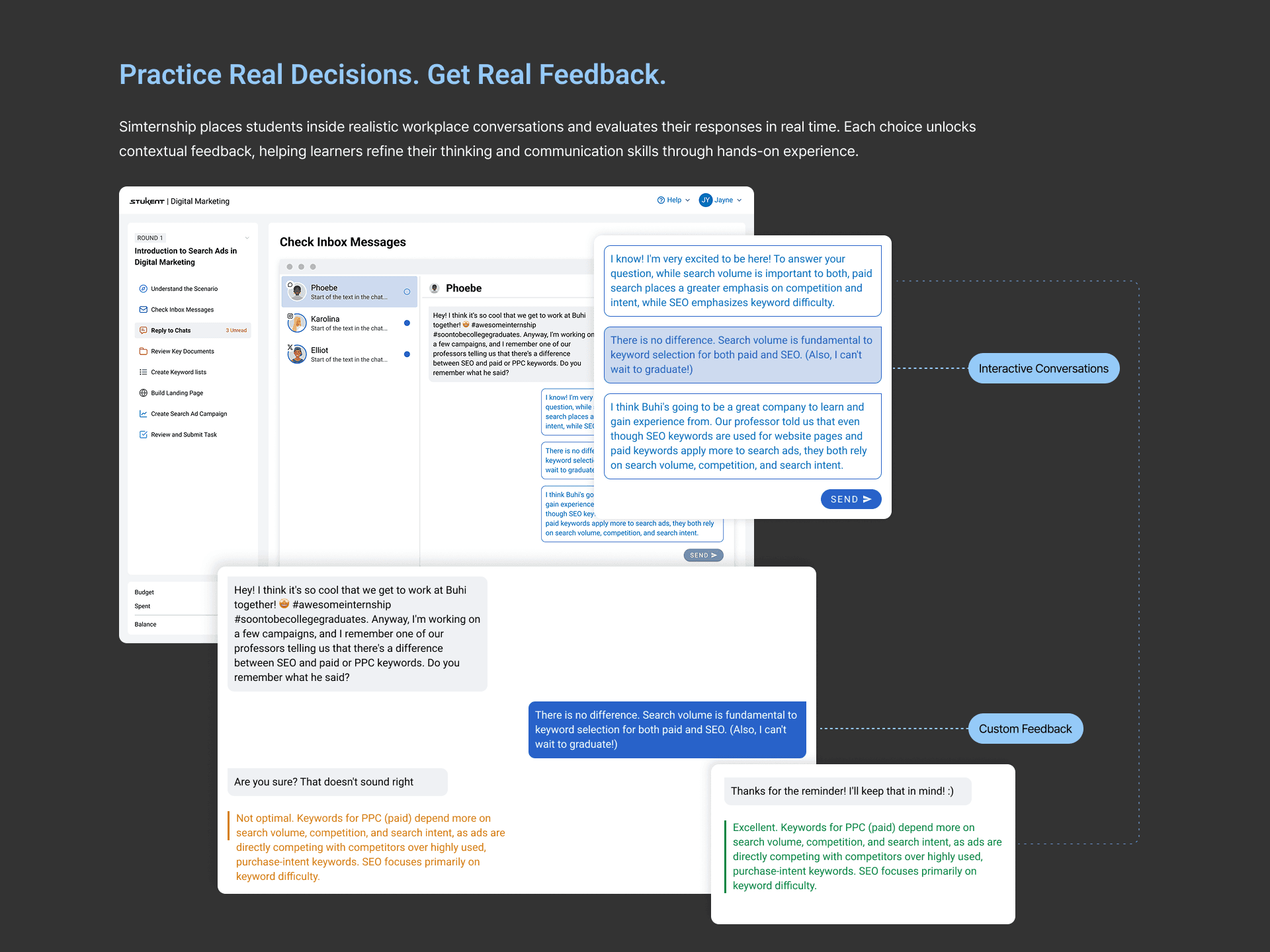
Designed feedback moments that turned student decisions into learning opportunities.
Instead of treating feedback as only a score, the experience helped students understand the impact of their choices and apply those insights in future rounds.
Experience Design
After mapping the learning journey, I designed the Simternship experience around guided tasks, realistic workplace context, and feedback-driven learning. The goal was to help students understand what to do, why each task mattered, and how their decisions connected to real-world outcomes.
Student Task Experience
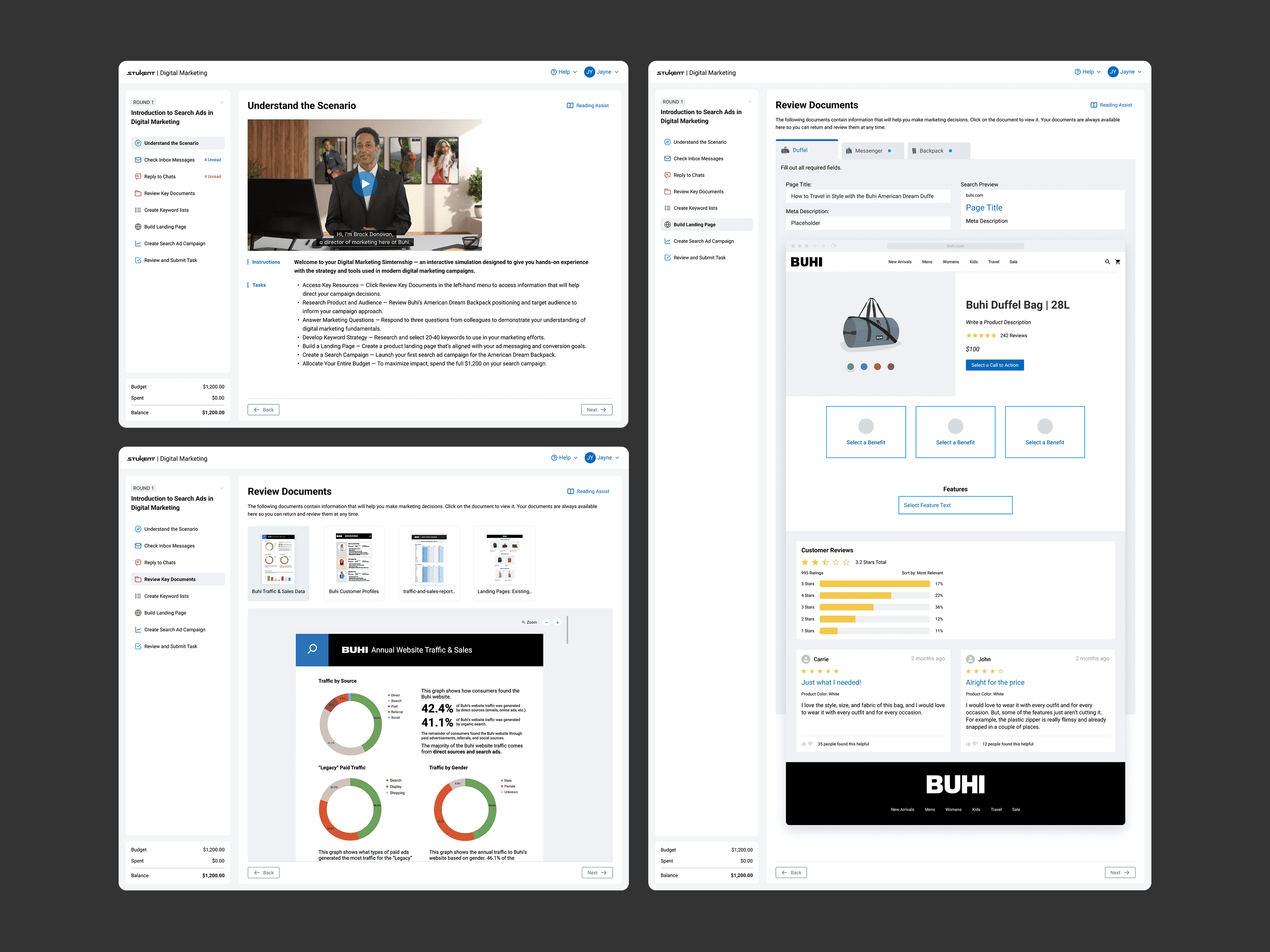
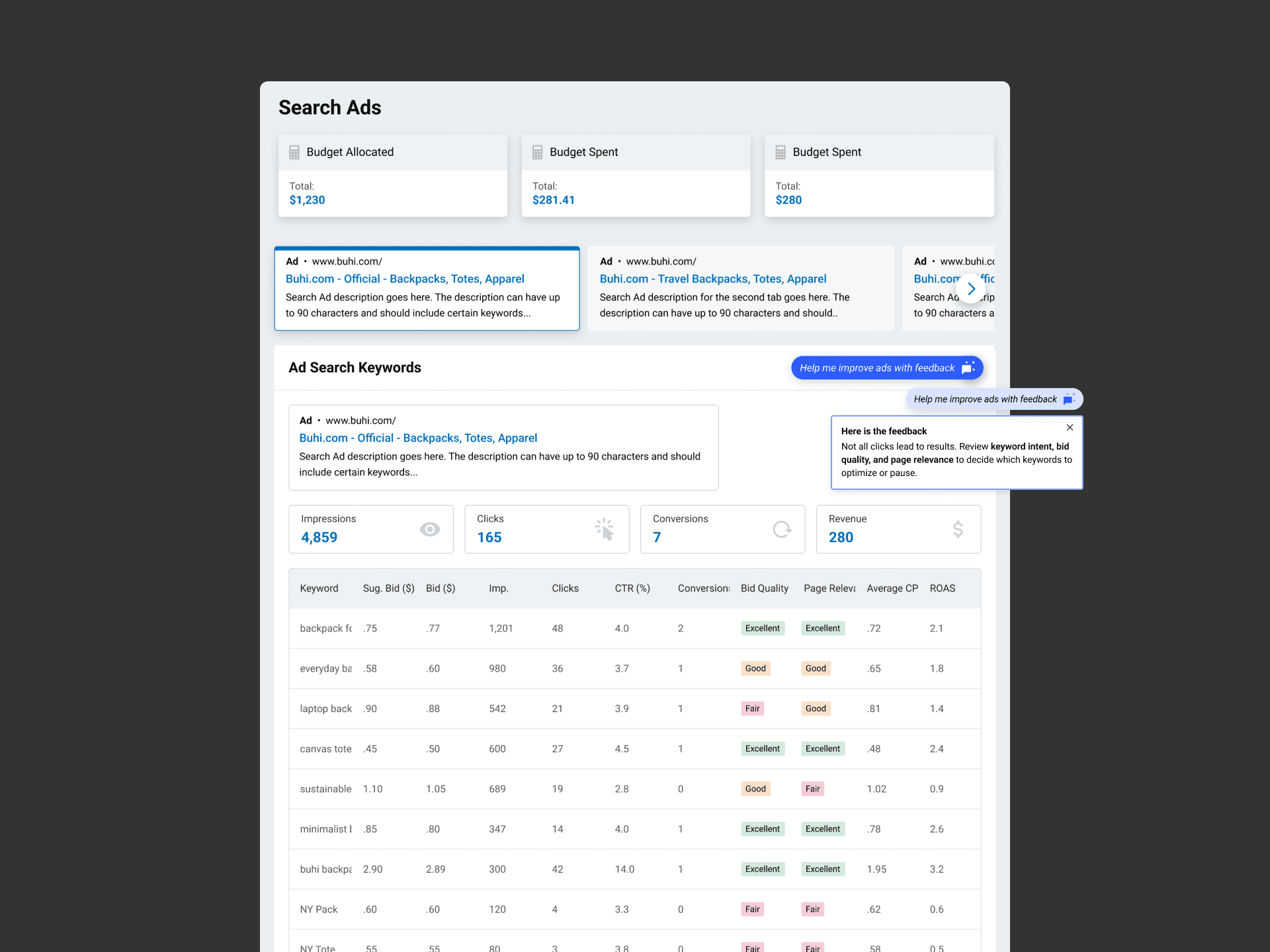
I designed high-fidelity screens that guided students through each simulation round, including scenario review, document analysis, inbox messages, chat responses, campaign tasks, and final submission.
Each screen was structured to keep students oriented with clear navigation, task progress, learning objectives, supporting context, and action points.
Outcome
The Simternship experience helped transform passive course content into an applied learning journey. By combining guided tasks, realistic workplace scenarios, decision-making moments, and contextual feedback, the product helped students connect classroom concepts to practical, career-ready skills.
Learning Impact
Student Impact:
Created a clearer path for students to move from learning concepts to applying them through realistic, internship-style tasks.
Product Impact:
Established a repeatable simulation structure that could scale across multiple subjects, rounds, and Simternship experiences.
Experience Impact:
Improved the learning flow by connecting scenarios, documents, messages, tasks, submission, and feedback into one guided experience.
Takeways
Student Research Validation:
By interviewing students and analyzing their feedback, I was able to turn real learning challenges into actionable design insights. Their input helped validate the task flow, clarify where guidance was needed, and shape a more practical simulation experience grounded in actual student behavior.
What I learned:
Designing simulations is about balancing guidance and autonomy. Students need enough structure to understand what to do, but enough freedom to make decisions, learn from mistakes, and build confidence through practice.