
Project Overview
Following Stukent's acquisition of BusinessU, the organization began consolidating two learning platforms — Mimic App and CTE — into a single ecosystem. While both products shared similar functionality, they operated independently with different workflows and user experiences.
Problem:
Mimic App and CTE operated as separate platforms with overlapping functionality, resulting in fragmented experiences, duplicate workflows, and growing maintenance complexity.
Goal:
Create a unified platform experience by migrating Mimic App functionality into CTE while minimizing disruption and establishing a scalable foundation for future growth.
My role:
Lead Product Designer responsible for UX strategy, migration planning, and workflow alignment across Student, Instructor, and Admin experiences.
Scope:
12-Month Migration
2 Platforms: Mimic App → CTE
3 User Types: Student · Instructor · Admin
Cross-Functional Team:
1 PM · 7 Engineers · 15 Stakeholders
Discovery & Research
Before defining the migration strategy, I analyzed both platforms to understand differences in workflows, permissions, and user experiences. The goal was to identify migration risks and establish a scalable path toward a unified ecosystem.
Key Findings
Workflow Differences:
Although Mimic App and CTE supported similar educational tasks, core workflows varied significantly across Student, Instructor, and Admin experiences.
Permission Complexity:
Role structures and access controls were implemented differently across platforms, creating migration challenges and governance risks.
Platform Architecture:
Many features appeared similar on the surface but relied on different underlying system structures and business rules.
User Surfaces
Instead of a single user group, the migration impacted three primary user surfaces (student, instructor, internal admin) that required independent evaluation throughout the transition.



Workflow Analysis
To identify migration risks, I mapped critical workflows across both platforms and compared differences in navigation, permissions, and task completion patterns.
Focus Areas
Feature parity analysis · Workflow alignment · Permission restructuring · Navigation consistency · Transitional UX planning
Goal
How can we migrate users into CTE without disrupting existing mental models?

Wireframe
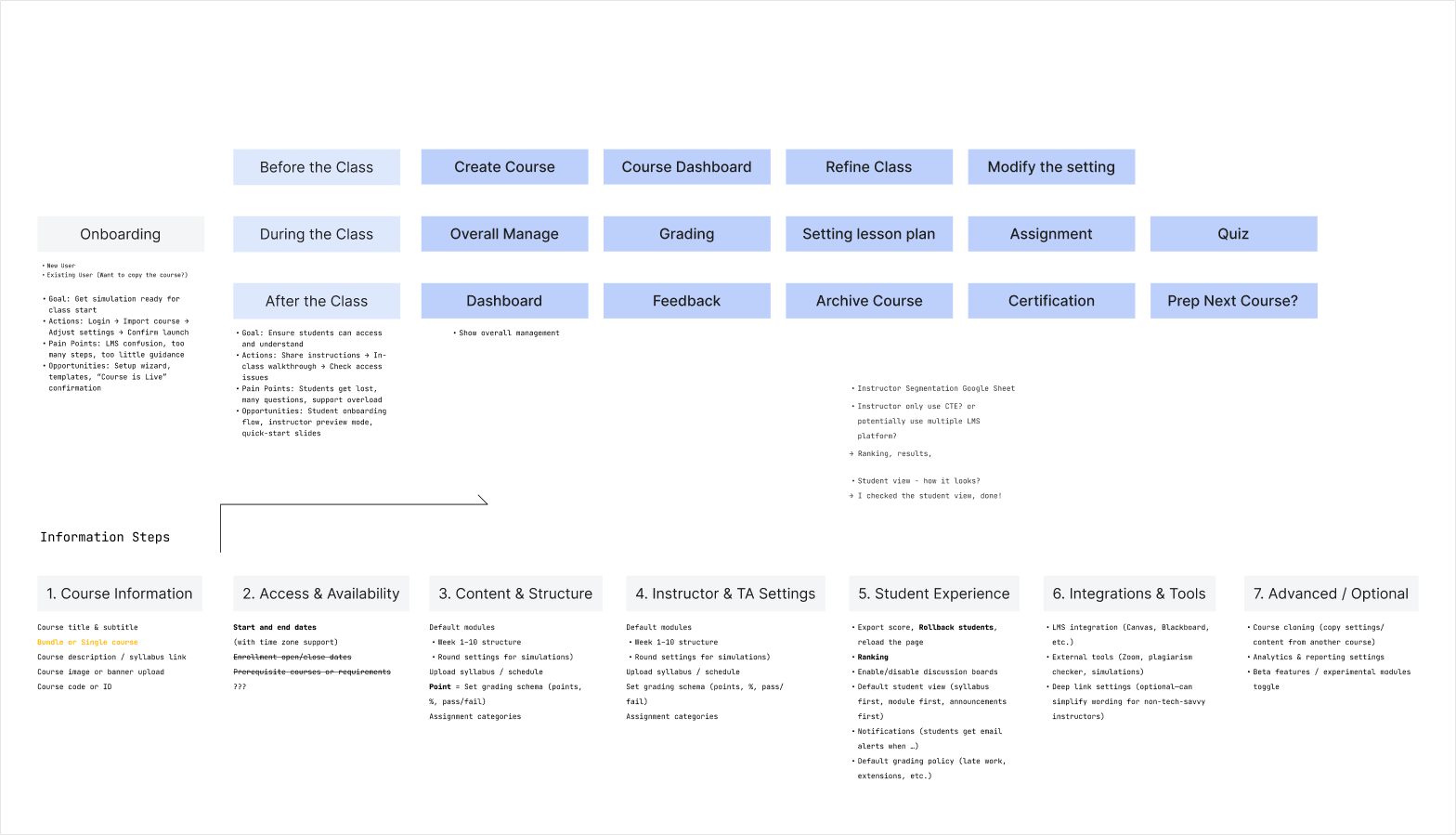
I mapped platform structures, workflows, and permission models across Mimic App and CTE. This process helped identify migration risks, uncover inconsistencies, and establish a shared framework for future platform consolidation.
Platform Mapping
Compared feature parity, workflow dependencies, and platform architecture to understand how both ecosystems operated.
Created a migration blueprint that visualized how features, workflows, and user roles would transition into CTE's architecture.


Information Architecture Alignment
Mapped navigation structures, permissions, and configuration systems to determine how Mimic functionality could be integrated into CTE without disrupting existing mental models.
Focused on creating a scalable architecture that supported both immediate migration goals and long-term platform growth.
Design
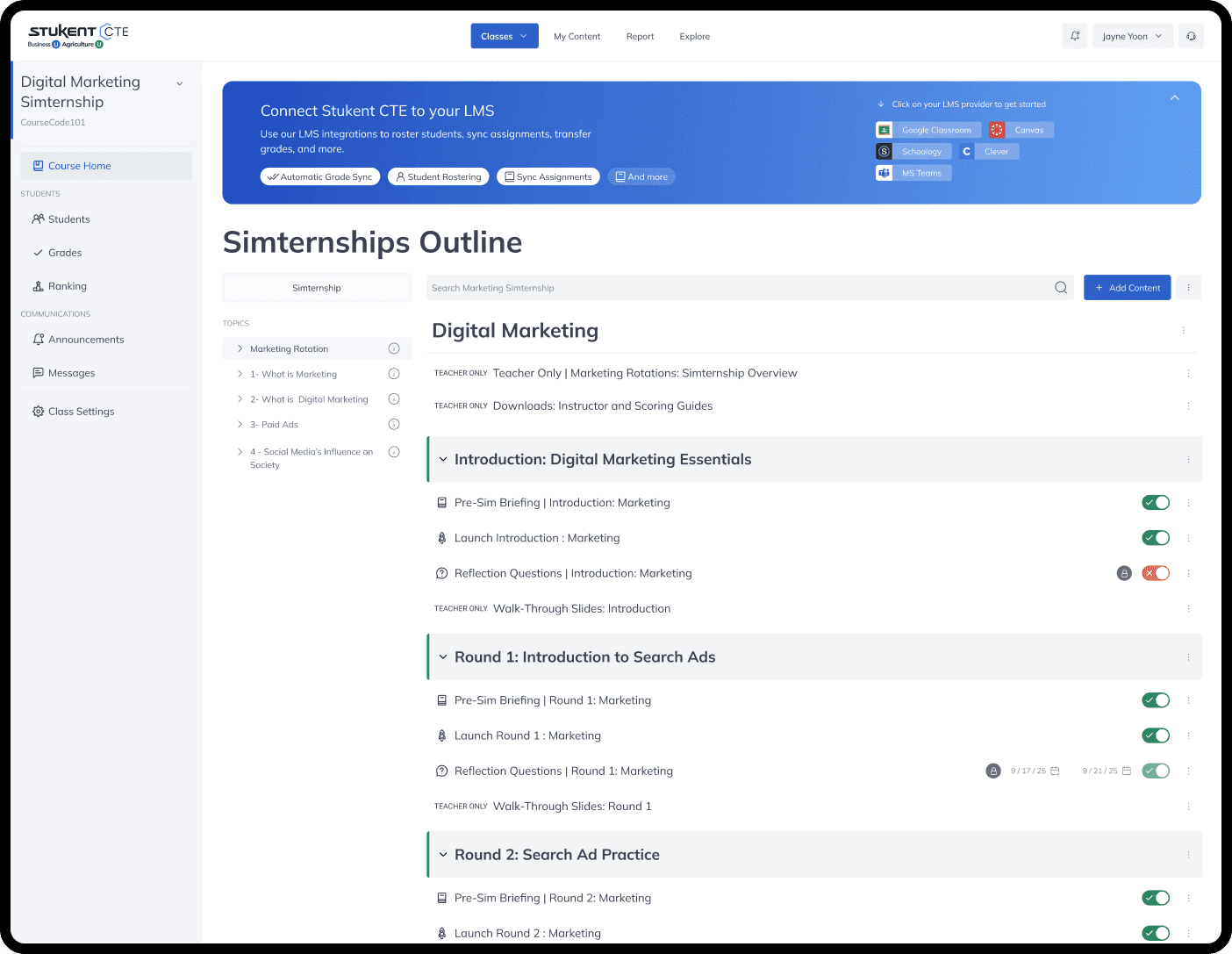
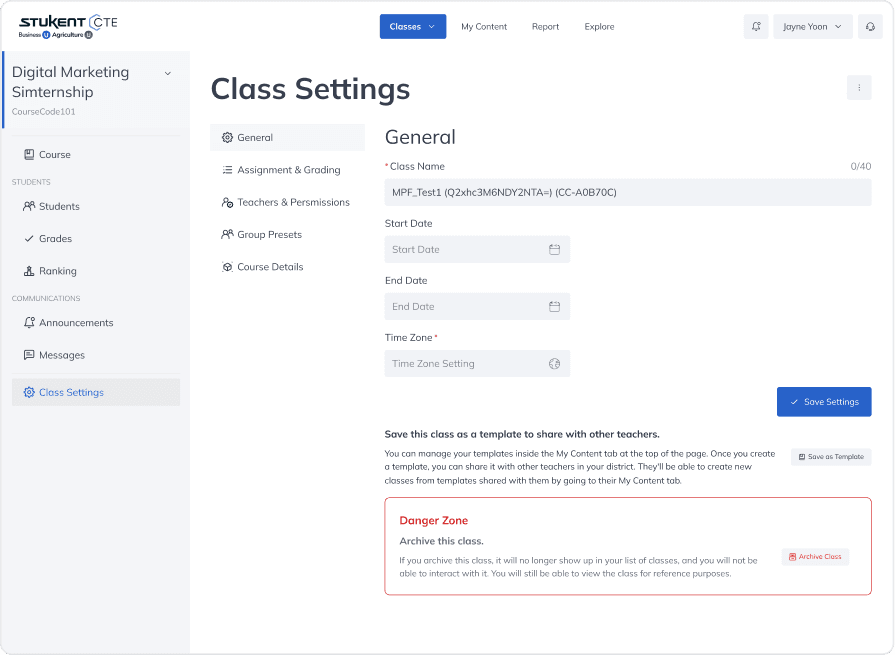
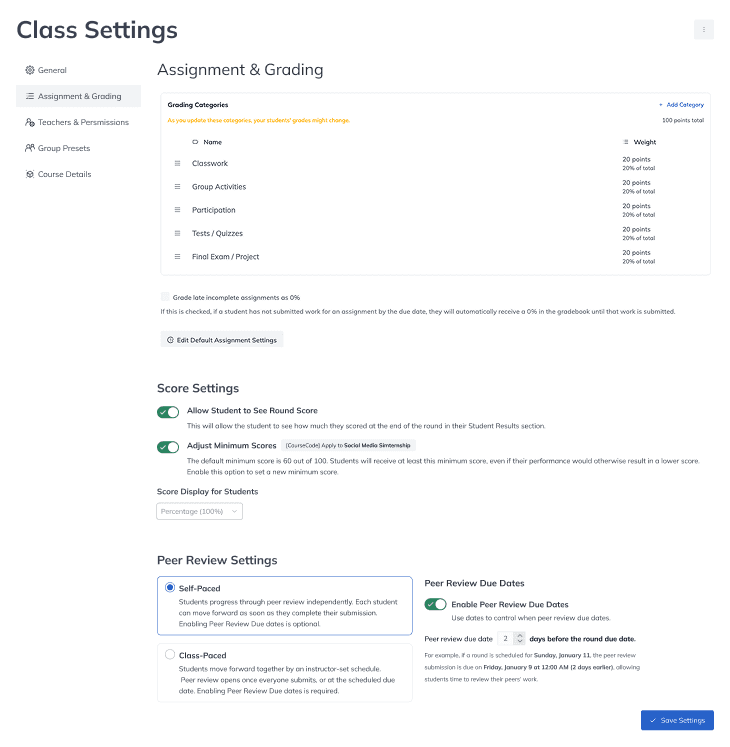
Designed high-fidelity screens that brought migrated workflows into CTE, including class settings, instructor views, and role-based controls.
Mockups
These are a high fidelity design that represents a final product
I created all the website pages mockups, incorporating the right design elements such as typography, color, iconography, and developed all the necessary components and elements.
The goal was to demonstrate the final NAD portals website in as much detail as possible.

Setting portal:


Instructor portal:



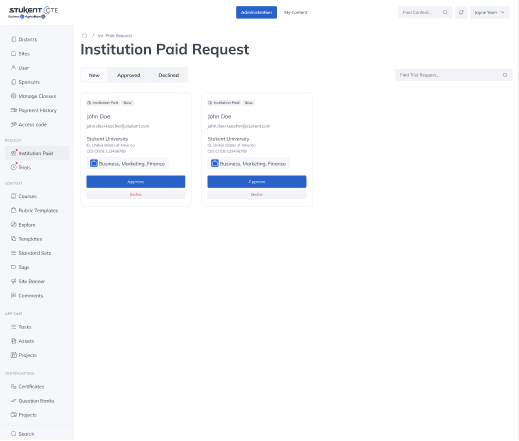
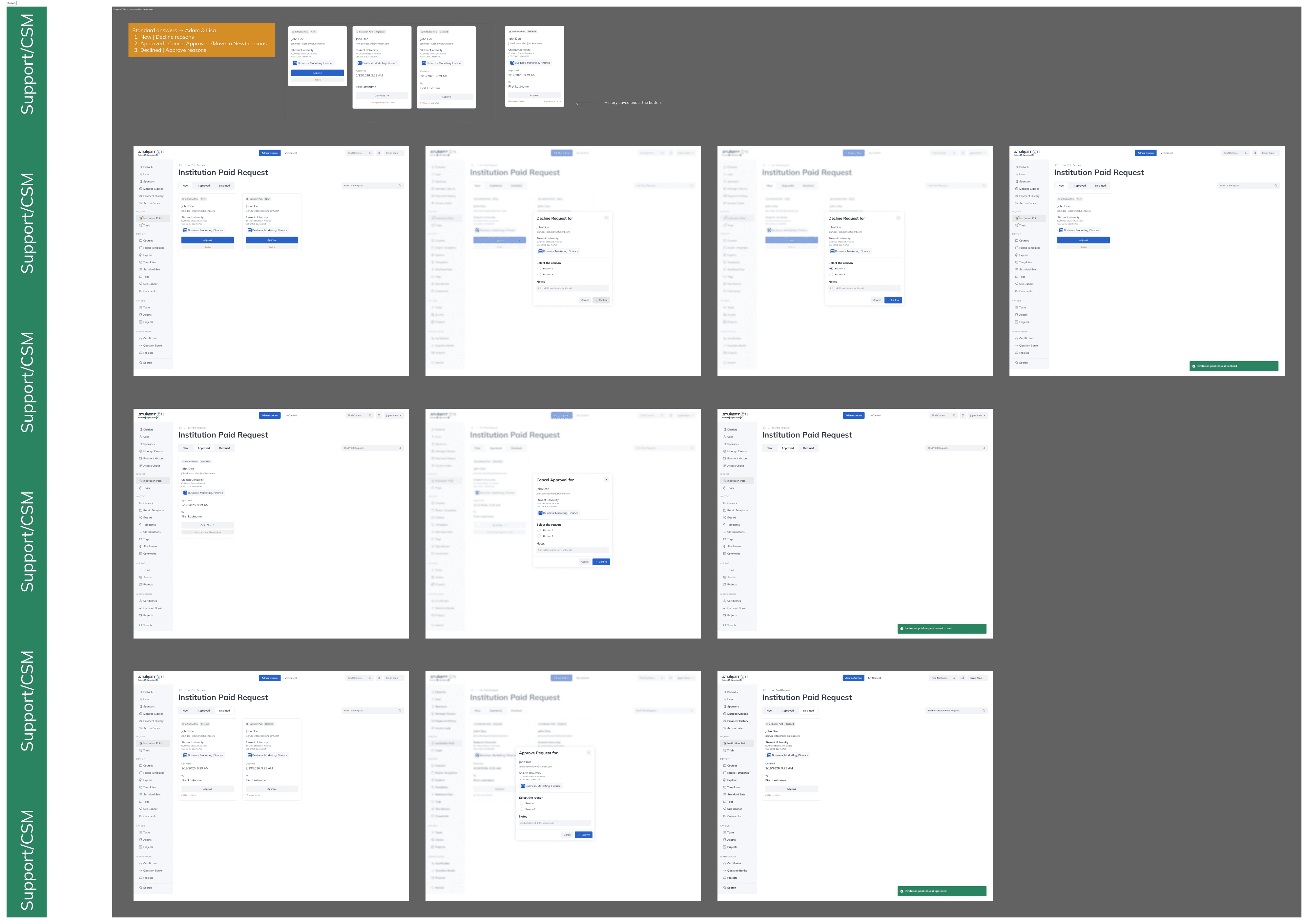
Instructor Paid Request Management:

Student Paid Request Management:

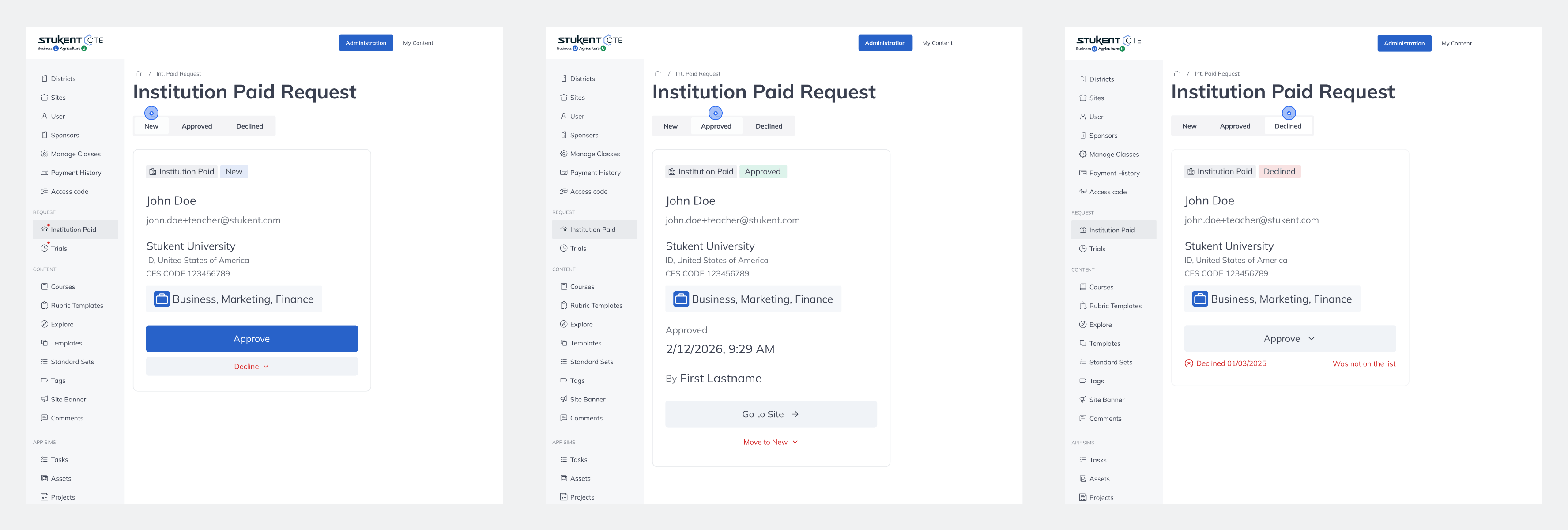
Admin Paid Request Management:
Outcome
The migration effort established a shared foundation across workflows, permissions, and platform governance. Rather than simply transferring features, the project created a clearer operational structure that supported long-term platform consolidation.
Platform Impact
Student Impact:
Students gained a more predictable learning experience through consistent navigation, clearer access status, and improved visibility into course activation and licensing workflows.
Instructor Impact:
Instructors benefited from unified class configuration, standardized payment and licensing workflows, and reduced ambiguity across platform settings.
Admin Impact:
Administrators gained a structured approval lifecycle, clearer permission governance, and improved visibility into institution-level operations during migration.
Takeways
Cross-Functional Collaboration:
This project reinforced that successful platform migrations require more than feature parity. Aligning workflows, permissions, and user expectations is often more critical than redesigning interfaces.
What I learned:
Migration projects are fundamentally change-management challenges. Maintaining user trust depends on preserving familiar mental models while gradually introducing structural improvements.